I find Iain Dale's blog posts increasingly difficult to read due to a variety of factors, not least his pomposity. Yet, for some reason, he is one of those 'must-read' sites. Today he made a post which epitomises everything that irritates me about his blog - a post on a Daily Mail article about unemployment.
The article itself is a travesty of modern print-publishing. If I had the time, I'd take the article apart line-by-line. However, all I can afford is a couple of key thoughts based on quotes from the article itself:
1. "I wasn't expecting any sympathy. Just as well. I didn't get any. Just lots more questions about me, my wife, my children, my state of health, my nationality, whether I'd been abroad recently, how much savings I had."
If you weren't expecting any sympathy, why make a point out of the fact you didn't receive any. If you were expecting sympathy (which seems to be the case), why state the opposite?
The questions that were asked seem to me to be necessary in order to ensure that people do not fraudulently apply for benefits for which they are not entitled. This seems to me to be a sensible thing for a government to insist upon. Yes, it makes the process of applying for benefits slightly more burdensome for those with a legitimate claim than otherwise, but this is surely preferable to letting people (effectively) steal from the taxpayer.
2. "The 'system' that I had supported with tens of thousands of pounds over 35 years of work had treated me like a number".
The NHS assigns everyone a number. As does the DVLA. And banks. And schools, universities, exam boards. Modern databases require some form of unique identifier. Assigning such a unique number improves the efficiency with which services which rely on mass databases can operate. Such databases would not be possible if you did not uniquely identify individuals. Most people are 'treated as numbers' in most parts their everyday life and yet selectively complain about it. I find this bizarre.
3. "Outside I was overwhelmed with a sense of despair, humiliation, anger and helplessness. I called my wife. Although I find it hard to believe now, I uttered: 'I feel like throwing myself under a bus.'"
It seems to me that the reason the writer felt like this was because he was unemployed. Not because he'd had to answer a few questions at a JobCentre. Anybody who feels a desire to kill themselves because they are asked some personal questions for the purposes of receiving benefits should seek medical help.
4. "She had to fill in three potential areas of work for the job search she was going to conduct. I'm told that the workshy, feckless scroungers come up with all sorts of ambitious career goals so that they will never be matched to a job."
Does the writer consider himself a "workshy, feckless scrounger"? Applying such generalisations to those who seek help from the government in their time of need is unfortunate. Maybe some of the "workshy, feckless scroungers" referred to included individuals not too dissimilar to the writer himself? Most families receive some form of tax credit. We don't find derogatory ways of describing them, do we? A minority of people try and abuse the benefit system. However it is right that we have a form of social insurance in the event that individuals find their circumstances dramatically changed.
5. "The system"
Use of inverted comments, indeed use of the whole statement, makes my blood boil. It is unnecessary.
That Dale is so quick to promote shoddy writing and argumentation is disapointing from a self-styled right-of-centre pundit. I would have expected more thoughtful consideration. It seems to me desirable to have an efficient administration of our benefits system so as to minimise the impact on the taxpayer, and maximise the effectiveness of welfare programmes.
Dale evidently hasn't properly thought through the implications of providing some sort of one-on-one counselling for every claimant of Jobseekers allowance.
Benefits should be awarded on a firm but fair basis. The Daily Mail article gives me confidence that this is the case in reality, even if the writer feels ashamed for having to claim benefits.
That shame isn't the result of the Government. Rather, it is precisely the result of poor invective such as that exhibited in his own article.
Sunday, November 16
An unlikely saviour?
"The Prime Minister has to take a double-or-quits gamble. The Tories do not. George Osborne's critics are only thinking eight days ahead. He is trying to see 18 months ahead. That makes the Shadow Chancellor smarter than those Tories who want to toss him overboard."
Andrew Rawnsley comes to George Osborne's defence in the Observer.
Friday, November 14
Inked off
One of the issues that vexes me is why some of the freesheets given out on London's streets morning and night more often end up all over my hands than remain on the pages onto which they were originally printed.
It is more than mildly irritating that upon arriving at the office each morning, the first thing I have to do is to wash my hands as a result of merely perusing the Metro.
Surely in this technological age, somebody could come up with a way of printing with ink that doesn't come off in your hands. And more than that, that newspaper proprietors would use it...
It is more than mildly irritating that upon arriving at the office each morning, the first thing I have to do is to wash my hands as a result of merely perusing the Metro.
Surely in this technological age, somebody could come up with a way of printing with ink that doesn't come off in your hands. And more than that, that newspaper proprietors would use it...
Sunday, November 9
The futility of hope
Barack Obama's election victory is probably historic. But voters are likely to end up being disappointed.
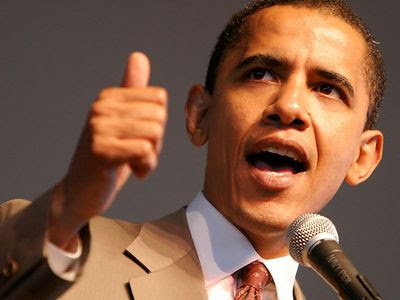

Barack Obama's election victory has rightly been hailed as an important step forward in US history, particularly for the Africa-American community. But I feel strongly that people are getting ahead of themselves about what the election victory will mean. Reality may frustrate our current hope.
There are a few issues I have with the excessive jubilation which has met Obama's victory:
Firstly, his election is the stuff of Hollywood movies. And like all good Hollywood movies, finer details are often overlooked. Of all those US voters I saw interviewed in the run up to election day and on the day itself, few (if any) gave solid policy-based reasons as to why they would vote for Obama. Most referred simply to 'a need for change'. It remains unclear in what ways Obama's policies will bring that change (these still need a lot of work - especially his economic policies), or if he will be able to at all.
Related to that point: a President should be judged on his actions, not his rhetoric or his skin colour. It is widely accepted that Obama's victory has been helped in part by a tough two terms under George W. Bush. But it is the current President who serves to show that mistakes in office can reflect very badly on entire political career. Obama promises change. He now has to deliver it. And supporters should recognise the inherent difficulties of putting promises into action, instead of putting the cart before the horse and assuming change has occurred simply by virtue of Obama's election victory - he has the potential to be a transformational figure, but whether or not he is remains to be seen.
Thirdly, the election of a black President does not necessarily mean that the civil rights issue is over, or even ameliorating. At the end of his (possible) eight years in office, the black community in America will need to assess whether or not Obama has improved their life chances. It is still entirely feasible that he will fail to do so. Or, indeed, that Obama proves less capable as a President than he does at the lecturn. A bad stint in office from Obama could set back the cause of civil rights campaigners further than his election as President progresses it.
Finally, Obama's election victory isn't necessarily as historic as some people suggest. It is clear the mainstream media were hoping for an Obama victory because it would make the better story, and he got a fair wind as a result. But Obama raised close to $1bn for his campaign, and outspent McCain by more than double. Obama's breaking of a commitment to accept public funding allowed him to raise significantly more than McCain, and to spend more in key states. It was therefore hardly a level playing field. Given this, and the unpopularity of the incumbent, is a Democrat win really that exceptional? Perhaps the real question is why Obama didn't do even better, given these other contextual factors.
Obama has a lot going for him - youth, intelligence, oratory, the ability to surround himself with the right people and so on. However, he has made the mistake of raising expectations too high and can now only fail to deliver.
We hope that the promised change will come. But, knowing politics, that hope is likely to be futile.
UPDATE: A friend last night reminded me of a line Tony Blair once used, reflecting on his own experience: "You campaign in poetry, and govern in prose."
There are a few issues I have with the excessive jubilation which has met Obama's victory:
Firstly, his election is the stuff of Hollywood movies. And like all good Hollywood movies, finer details are often overlooked. Of all those US voters I saw interviewed in the run up to election day and on the day itself, few (if any) gave solid policy-based reasons as to why they would vote for Obama. Most referred simply to 'a need for change'. It remains unclear in what ways Obama's policies will bring that change (these still need a lot of work - especially his economic policies), or if he will be able to at all.
Related to that point: a President should be judged on his actions, not his rhetoric or his skin colour. It is widely accepted that Obama's victory has been helped in part by a tough two terms under George W. Bush. But it is the current President who serves to show that mistakes in office can reflect very badly on entire political career. Obama promises change. He now has to deliver it. And supporters should recognise the inherent difficulties of putting promises into action, instead of putting the cart before the horse and assuming change has occurred simply by virtue of Obama's election victory - he has the potential to be a transformational figure, but whether or not he is remains to be seen.
Thirdly, the election of a black President does not necessarily mean that the civil rights issue is over, or even ameliorating. At the end of his (possible) eight years in office, the black community in America will need to assess whether or not Obama has improved their life chances. It is still entirely feasible that he will fail to do so. Or, indeed, that Obama proves less capable as a President than he does at the lecturn. A bad stint in office from Obama could set back the cause of civil rights campaigners further than his election as President progresses it.
Finally, Obama's election victory isn't necessarily as historic as some people suggest. It is clear the mainstream media were hoping for an Obama victory because it would make the better story, and he got a fair wind as a result. But Obama raised close to $1bn for his campaign, and outspent McCain by more than double. Obama's breaking of a commitment to accept public funding allowed him to raise significantly more than McCain, and to spend more in key states. It was therefore hardly a level playing field. Given this, and the unpopularity of the incumbent, is a Democrat win really that exceptional? Perhaps the real question is why Obama didn't do even better, given these other contextual factors.
Obama has a lot going for him - youth, intelligence, oratory, the ability to surround himself with the right people and so on. However, he has made the mistake of raising expectations too high and can now only fail to deliver.
We hope that the promised change will come. But, knowing politics, that hope is likely to be futile.
UPDATE: A friend last night reminded me of a line Tony Blair once used, reflecting on his own experience: "You campaign in poetry, and govern in prose."
Saturday, November 1
Say what you 'C'
Ben Brogan suggests Labour have "found the interweb" on his blog this morning, embedding video proof of the new line of e-attack from the party (reproduced below).
I think it's a little too early to make such bold proclamations - the video trots out the usual list of well-worn attacks on the Conservative party and all without the wit that viral videos require to be fully effective.
If Labour have found the interweb, then they obviously don't know how to use it properly.
A case of "a lot done, a lot still to do"..!?
Sunday, October 26
Old Mother Hubbard
"The Government’s deficit is so big that the cupboard is now bare."
Apparently it is a la mode to patronise the electorate by reducing the complexities of modern fiscal policy to children's nursery rhymes.
Perhaps here is what we can expect from the Conservative Party policy commissions in the run up to the election:
- The Baa Baa Black Sheep Agricultural Policy
- The Humpty Dumpty Defence Plan
- The Simple Simon Vision for Small Businesses
- The Pat-A-Cake Pat-A-Cake Child Poverty Action Plan
- The Owl and the Pussycat Civil Partnership Bill
- The Ride a Cock-Horse Transport Plan
Saturday, August 9
Spoilt ballot
The decision by Labour's National Policy Forum to support reducing the voting age to 16 is confused, is unlikely to achieve its intended aim, and doesn't address the problem of low political activism amongst younger voters.
Apparently this fisking business is in vogue in the "blogosphere", so I've decided to fisk this post at Labourhome titled "Labour takes the final leap".
Apparently this fisking business is in vogue in the "blogosphere", so I've decided to fisk this post at Labourhome titled "Labour takes the final leap".
The time has come to give 16 year olds the right to voteLeft-wing commentator Ellie Levenson outlines good reasons why this is not the case in her 2004 Independent article. I will not repeat them here for reasons of brevity.
Many politicians and party activists decry the fact that 18-25 year olds are the least engaged voting demographic. However, what many fail to realise is that 16-18 year olds are considerably more interested in politics, and by disenfranchising young adults, we isolate them and many lose interest by the time they are old enough to vote.Two things: Firstly, the logic of this argument points to lowering the voting age beyond merely 16 (for instance - we wouldn't to disenfranchise 14 year olds, say, who may be interested in politics but unlikely to vote by the time they're 16 and so on ad infinitum) which is plainly absurd. Secondly, it is just stupid to suggest that the best way to get 18-25 year olds to vote is to give 16 and 17 year olds the vote. This doesn't address the root cause of apathy at all, and will just add to the stock of people who abstain from voting.
The Labour Party has made many positive steps towards engaging young people; the introduction of Citizenship education in schools, the appointment of a Labour Party Vice Chair Youth, currently Dawn Butler MP, and even the amount of money being ploughed into youth services speaks volumes in itself. However, the National Policy Forum, with overwhelming support from both CLPs and Trade Unions, has now taken the final leap, and elected to reduce the voting age to 16.If Labour's "positive steps" have been so successful, you would expect voter turnout amongst younger groups to have increased since 1997. But they haven't. It is voter turnout amongst the under-25s which is taking the final leap (off a cliff):
- Under 25 turnout 1997 General Election - 59.7%
- Under 25 turnout 2001 General Election - 49.4%
- Under 25 turnout 2005 General Election - 44.3%
Oh dear. And giving a whole additional tranche of (largely) uninformed people a chance not to vote is supposed to ameliorate the situation? Give me a break.
In doing so, the party has responded to a wealth of national campaigns on the issue, being run by numerous organisations, from the National Union of Students to the British Youth Council. Not only do these organisations put forward their own compelling cases, but the very fact that teenagers are prepared to run campaigns on this issue should be proof in itself that there is the desire out there amongst young people to have the right to vote.
Read: Labour's NPF has succumbed to a well-organised lobby group with a vested interest in the outcome and who evidently don't represent the constituency they claim to (because most young people don't vote). Just because there exist a handful of political hacks aged 16 and 17 does not mean all 16 and 17 year olds are interested in politics, nor does it mean all 16 and 17 year olds deserve the vote. And the NPF should do better than just accepting any argument put forward to it by a pressure group.
However, if all of this seems too theoretical, there is an even simpler argument for allowing young people to vote. That old adage “no taxation without representation” pretty much sums it up. If young people are working and paying income tax, then they have the right to vote for who they pay those taxes too. Furthermore, if 16 year olds can get married, pay adult fares on transport, and die for their country, they quite simply should have the right to vote.
16 and 17 years olds for the large part don't pay tax, and given Labour has proposed to keep all children in school until 18, this would preclude them earning a sufficient amount to pay income tax. It is confused to argue that we should keep 16 and 17 year olds in school and simultaneously argue that 16 year olds need the vote because they pay income tax.
Moreover, the unemployed don't pay tax either, but I haven't seen a legion of progressives marching on the NPF to demand Labour revoke suffrage from those without a job. Ellie Levenson takes apart other well used fallacies often trotted out in support of lowering the voting age.
Thus, I am hopeful that Annual Conference will respond positively to these arguments and ratify the decision made by the National Policy Forum. The time has come for 16 year olds to be given the right to vote. There is wide ranging support both within the youth movement and outside of it. Young people are more informed about politics than ever before. Please let’s give them a chance to express their interest, before we lose it for ever.
I am hopeful that Labour's annual conference doesn't have a collective brain failure and support this barmy policy suggestion. Giving 16 year olds the vote won't cement their interest in politics (and let's not forget that the vast majority of 16 year olds aren't even politically aware, let alone active). Extending suffrage to 16 year olds is an easy way for politicians to appear like they are doing something about young voter apathy. But the reason 18-25 year olds don't vote isn't because they didn't have the vote when they were 16. It's because politicians don't work hard enough or offer enough to that group to make it worth their while to vote.
The problem with voter apathy lies not with our electoral system, but with our politicians. Let's fix them - the problem - to encourage more young people to vote.
I'm not personally opposed to extending suffrage given legitimate reasons to do so. But I have not seen any compelling arguments on the issue of giving 16 year olds the vote.
So maybe all these 16 years who are so politically aware can come up with better reasons for extending suffrage to them, instead of the lazy and ill-considered argumentation that appears to be on offer.
