Thursday, June 12

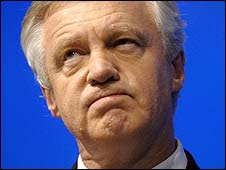
Labour should not indulge David Davis' ego

Labour should not stand a candidate against David Davis in the Haltemprice and Howden by-election to show the stunt up for what it really is - a waste of the electorate's time, and taxpayers' money.
What is the point of a representative democracy if MPs resort to referendum by-proxy every time the majority of their colleagues pass legislation which they oppose? There is a very good reason why the Rousseau model of democracy is unworkable; the electorate elect representatives for a reason and not to then make every decision themselves.

The fact of the matter is that the issue was debated by our elected representatives in Parliament, and a vote was taken. All MPs, elected to represent their constituencies (meant in the broad sense - i.e. both geographically, and ideologically), had a vote, and they were free to use that vote in accordance with their own conscience.

Those who opposed the anti-terror legisation lost. In Parliament. Where legislation is decided.

Moving the debate over this issue to a constituency in Yorkshire is not how legislation in this country should be decided.

Hence I vehemently disagree with the view of former Davis henchman, Iain Dale, on the resignation - that:

"this isn't about one man's vanity. It is about the ability to sacrifice personal and public advantage for a greater cause."
And that:

"If [Labour don't field a candidate], they will be treating the issue (and voters) with contempt. The 42 day issue can now be debated fully during the by election campaign."
Rubbish. It is David Davis who is treating the issue (and voters) with contempt. Firstly, he is ignoring the proper institutions in which these matters should (and have) been decided. Secondly, he is forcing the taxpayer to fund his vanity exercise - money which could be better spent on public service provision, not ego-massaging.

Labour would do better to tell it how it is: David Davis put his arguments to Parliament. And lost. Therefore there is no need to re-engage him on this debate in a by-election.

It is to the Lords that Labour's attention should now focus. The bodies of Parliament - not Haltemprice and Howden - is where this matter should rightly be decided.
Sunday, April 27

Mayoral Debate

Politics as it should be?

Monday, April 21

Rogue Poll?

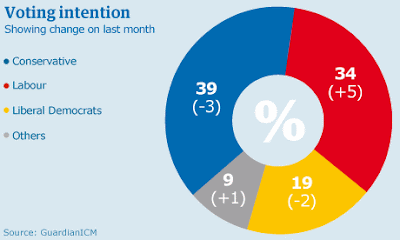
It's difficult to believe that the events of the last week or so would lead to an increase in Labour support. But that's exactly what the latest Guardian/ICM poll shows...

According to the Guardian, Labour have improved their polling position by 5 points on the previous ICM poll to narrow the gap between themselves and the Conservatives to just 5 points.

The poll shows the Conservatives on a 39% vote share, Labour on 34%, the Lib Dems on 19% and others on 9%.


Is this the start of a turnaround in fortunes for Gordon Brown? Or merely an abberation in an otherwise intransigent trend?

Mike Smithson over at Political Betting - an expert on these matters - refuses to be drawn either way.

Sunday, April 20

Fudget

The current debate over the 10p tax rate confuses two distinct policies introduced in Gordon Brown's last Budget.

This morning I posted over on Labourhome about the 10p tax issue. Whilst the title of the post might have been a little inflamatory, I stand by my general points.

I'm constantly surprised, however, by how well-meaning Labour supporters seem to oppose any measures which don't appear to be "Labour", even if the effect of those measures is consistent with the principles of the party.

Lump sum transfers (i.e. tax credits) are far better than marginal tax rates at targeting resources towards those on low incomes. Why? Because lower marginal tax rates are a benefit enjoyed by all, whereas tax credits target resources where they are most needed.

If I as a policy maker want to help those on low incomes, then why should I give EVERYBODY a tax cut - even those who can afford to pay. Isn't it better to help those most in need, rather than indiscriminantly handing out tax rebates to prince and pauper alike?

Apparently not, if you read a lot of the comment that has been generated in recent days about the matter.

Sadly, the current argument about the 10p tax rate is caused by the combination of two distinct policies in Gordon Brown's last budget - the removal of the 10p tax rate and the lowering of the basic rate to 20%.

People believe that the one paid for the other. This isn't necessarily strictly true. But the combination of the two policies confuses the issue in peoples' minds.

The government would have an easier job explaining the benefits of the tax credit system over the starting rate had they not abolished the starting rate at the same time as lowering the basic rate.

The Thick(ness) of It

The Oxford Union's decision to invite Chris Langham to speak is just a publicity stunt, despite what the current President says.


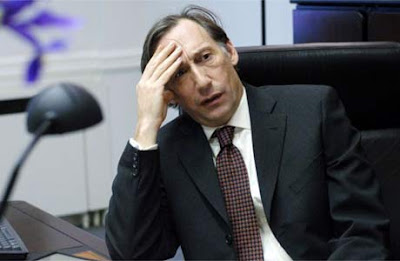
As a fan of the BBC comedy series, The Thick of It, I was both shocked and disappointed when its main star, Chris Langham, was convicted of child pornography offences. As a result of his actions, his career - which had up to that point promised so much - ended abruptly.

So it is with some confusion that I heard the news this week that the Oxford Union will be inviting Chris Langham to speak this term.

On what, exactly? How to commit child pornography offences?

I supported the Union over their decision to invite Nick Griffin and David Irving for a debate on free speech - their attendance had some relevance to the topic under discussion.

However, inviting Chris Langham for a speaker meeting is not, in the same way, defensible.

Current President Ben Tansey suggests that "[The Oxford Union] do not invite speakers for publicity."

He is wrong.

Wednesday, April 9

Is this the issue that will cost Labour the next election?

Help the Aged and Friends of the Earth today started legal proceedings against the Government because of alleged inaction over fuel poverty. Will pensioner power force Labour from Government at the next national poll?

Today's news that charities Help the Aged and Friends of the Earth are seeking a judicial review application in order to challenge the Government over its fuel poverty strategy didn't seem to set the media alight, but this is a slow-burning issue (excuse the pun) which could seriously threaten Labour's electoral chances at the next election.

Despite official consumer price inflation figures suggesting increases in the general level of prices remain relatively modest - 2.3% in 2007 - fuel prices have been rising at a much faster rate in recent years. For example, electricity price inflation was 8.0% in 2007, down from 21.7% in 2006, and gas price inflation was 7.6% in 2007, down from 31.3% in 2006. In summary, domestic fuel prices rose at over three times the rate of general prices last year, and almost fifteen times as fast the year before.*

Those who lose out from high price inflation on 'necessary' goods (goods that are demand-inelastic) are predominantly those on fixed incomes, such as pensioners and the unemployed.

Rightly, the Government had perviously committed to eradicating fuel poverty by 2010 - this was a legally binding commitment. Yet in their latest annual report on progress towards these targets, the Fuel Poverty Advisory Group (alarmingly) note that:
"The Government appears to have given up on the legally binding 2010 Fuel Poverty Target."
In 2007, 2.9m households and 2.3m vulnerable households remained in fuel poverty.

Help the Aged and Friends of the Earth are right that the Government should not give up on its promise to eradicate fuel poverty merely because energy prices continue to rise (if anything, that should be even more reason to meet its target).

However, the Government can ill-afford the additional expenditure necessary to fulfil its legal obligation on fuel poverty. Finances are already tight, and additional taxation in the current uncertain global economic climate is likely to compound the downside risks to the economy.

That will be scant consolation to the hundreds of thousands of pensioners who cannot afford to heat their homes.

If the 2010 target isn't met, and if the Government do little to alleviate current energy inflation, then pensioners (amongst others) will be rightly aggrieved. And what's more, they are the most likely to vent their anger at the ballot box.

The Government ignores its pledge on fuel poverty at its own peril...

*Source: ONS

False hope?

As when football club Chairman express their confidence in a troubled manager, a Chancellor expressing "optimism" over the economy will surely lead to doom?

Alastair Darling today hit back at IMF claims that UK growth will slow to 1.6% in 2008. This is a shade lower than the revised Budget predictions of 1.75% to 2.25% growth over the same period.

In the grand scheme of things, 1.6% growth is still remarkable given the current liquidity problems. But the economy is finely poised; it would still be possible for the UK economy to grow by around 1.0-1.3% this year, and yet register a mild technical recession - 2 successive quarters of contraction (which looks increasingly likely to occur in the US).

Which is the right forecast - the IMF's or the Treasury's - is a nigh-on impossible question to answer. As J.K. Galbraith once remarked that: "The only function of economic forecasting is to make astrology look respectable."

Nonetheless, when times are good, Chancellors need not voice 'optimism' about the economy. Economic optimism is a tool only deployed when times are turbulent. Darling's comments this morning make me slightly less optimistic about this year's porspects by virtue of the fact he felt it necessary to make them.

It's a bit like when Football Club Chairman express confidence in their managers who have dragged the club into a relegation fight - far from being a vote of confidence, you fully expect the manager to get sacked...